Overview of Photography Lighting Kits for Studio: Photography Lighting Kit For Studio
Lighting is a crucial element in photography that can dramatically affect the mood, clarity, and overall quality of images. A well-executed lighting setup can transform even the simplest subject into a stunning visual masterpiece. Photography lighting kits for studio use provide essential tools to help photographers harness the power of light, ensuring their creative vision comes to life.
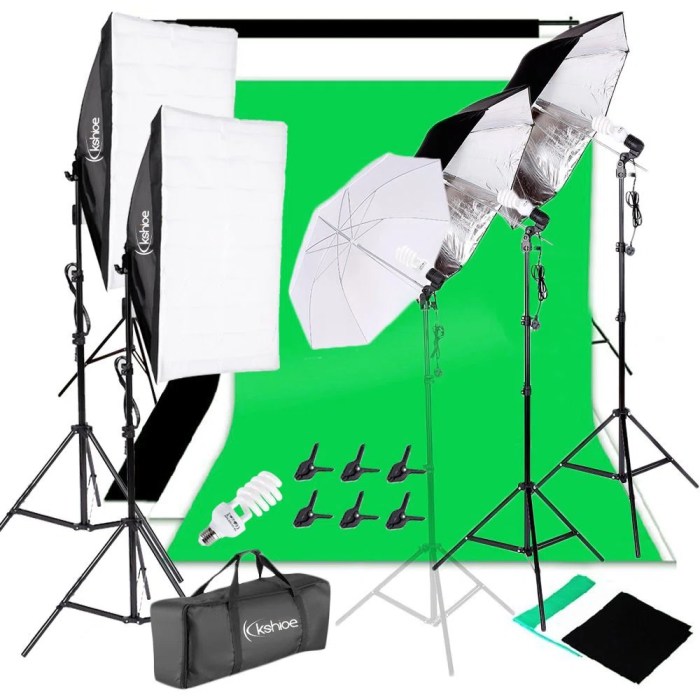
Different types of lighting kits are available for studio use, catering to various needs and preferences. These kits typically include essential components such as light stands, softboxes, umbrellas, and various light sources. Each component plays a vital role in creating the desired lighting effect, making it essential for photographers to understand their functionality and advantages.
Types of Lighting Used in Studio Photography
Lighting in studio photography can be categorized mainly into continuous lighting and flash lighting. Continuous lighting allows photographers to see how the light affects the subject in real-time, making it easier to make adjustments to achieve the desired effect. In contrast, flash lighting provides powerful bursts of light that can create dramatic effects but require careful timing and synchronization with the camera.
Various light sources are utilized in studio setups, including LED, fluorescent, and incandescent lights. LED lights are known for their energy efficiency and longevity, while fluorescent lights offer a softer quality of light. Incandescent lights, though less common in modern setups, provide a warm light but tend to consume more power.
Softboxes, umbrellas, and reflectors are essential modifiers that help control the quality and direction of light. Softboxes diffuse light, creating a soft, even illumination that reduces harsh shadows. Umbrellas, on the other hand, can either reflect or diffuse light, allowing for versatile lighting options. Reflectors are used to bounce light back onto the subject, enhancing brightness and reducing shadows.
Setting Up a Studio Lighting Kit
Arranging a basic lighting setup in a studio involves several key steps to ensure optimal results. First, determine the size of the space and the type of subject you will be shooting. This will guide your choice of lighting equipment and placement. Next, position your main light source at a 45-degree angle to the subject to create depth and dimension. Finally, adjust fill lights and background lights to achieve a balanced exposure.
| Space Size | Subject Type | Recommended Lighting Setup |
|---|---|---|
| Small (10×10 ft) | Portraits | 1 key light, 1 fill light, reflector |
| Medium (15×15 ft) | Product Photography | 2 key lights, 1 background light, softbox |
| Large (20×20 ft) | Group Shots | 3 key lights, 1 fill light, 2 reflectors |
Adjusting lighting angles is critical for achieving optimal results. Moving the light source closer or further away from the subject can impact the intensity and softness of the light. Experimenting with different angles can help you find the most flattering light for your subject.
Tips for Using Lighting Kits Effectively
Modifiers are essential tools for controlling light quality in studio photography. They help soften harsh light, reduce glare, and create a more pleasing aesthetic. Utilizing diffusers, softboxes, and grids can significantly enhance the quality of light reaching your subject.
Balancing ambient light with artificial light is crucial for achieving natural-looking images. This can be accomplished by adjusting the intensity of the artificial lights or using techniques such as bracketing exposures to capture the best elements of both light sources.
Common lighting issues, such as hotspots or shadows that are too harsh, can be addressed by adjusting the distance and angle of your lights. Regularly check your setup and make small adjustments to maintain balanced lighting throughout your session.
Advanced Lighting Techniques
Creative lighting setups can elevate portrait photography to new heights. Techniques such as backlighting and side lighting can create dramatic effects that emphasize the subject’s features and add depth to the images. Experimenting with positioning and light intensity can yield stunning results.
Using gels and filters is an effective way to alter the color of light in your setup. Gels can create mood and atmosphere, while filters can help achieve specific looks or correct color casts. Understanding how to manipulate color temperature can dramatically enhance your photography.
High-key and low-key lighting setups serve different artistic purposes. High-key lighting is characterized by bright, even lighting with minimal shadows, ideal for cheerful and vibrant subjects. In contrast, low-key lighting uses strong contrasts and shadows to create a dramatic and moody effect, perfect for certain types of portraits and artistic expression.
Maintenance and Care of Lighting Equipment
Maintaining your lighting equipment is essential for ensuring longevity and consistent performance. Regularly inspect your lights for any signs of wear and tear, and replace bulbs as needed. Proper care also includes storing equipment in protective cases to prevent damage.
When not in use, lighting equipment should be stored safely to avoid accidental damage or exposure to the elements. Make sure to keep all components organized, and consider using padded storage bags for fragile items such as softboxes and reflectors.
Cleaning procedures for lights and accessories should be performed gently to avoid damage. Use microfiber cloths to wipe down surfaces and ensure that bulbs and diffusers are free from dust and debris.
Budgeting for a Photography Lighting Kit
Budgeting for a photography lighting kit can vary significantly based on the quality and type of equipment you choose. Creating a table to Artikel the costs associated with different lighting kits can help you plan your purchases more effectively.
| Lighting Kit Type | Estimated Cost | Features |
|---|---|---|
| Basic Kit | $150 – $300 | Includes 2 softboxes, light stands, and bulbs |
| Intermediate Kit | $300 – $600 | Includes multiple light sources, modifiers, and accessories |
| Professional Kit | $600+ | High-end lights, extensive accessories, and advanced features |
Investing in quality lighting equipment is more beneficial than merely focusing on quantity. High-quality lights can produce better results and last longer, proving to be a worthwhile investment in the long run. However, beginners can start with budget-friendly options that still deliver decent results.
Common Mistakes to Avoid in Lighting
Photographers often make frequent errors when setting up their lighting, such as not adequately diffusing their light sources or positioning the lights too close to the subject. These mistakes can lead to unflattering images with harsh shadows and highlights.
Overexposure and underexposure can significantly impact the final images. Understanding how to read histograms and adjusting camera settings accordingly can help mitigate these issues and achieve a balanced exposure.
To ensure balanced lighting throughout your sessions, regularly assess your setup and make adjustments as needed. Utilizing test shots can help identify potential problems before the actual shoot begins.
Reviews and Recommendations for Lighting Kits, Photography Lighting Kit for Studio
When considering photography lighting kits, comparing popular brands can provide valuable insight into features, quality, and user satisfaction. Brands such as Neewer, Godox, and Profoto are well-regarded in the photography community for their reliable lighting solutions.
User-generated feedback on specific lighting products can be a great resource for making informed purchasing decisions. Many photographers share their experiences and tips online, offering practical advice on what works best for various shooting scenarios.
All-in-one kits versus custom setups each have their pros and cons. While all-in-one kits may provide convenience and cost savings, custom setups allow for greater flexibility and personalization to meet specific shooting needs.
Resources for Further Learning
For those looking to deepen their understanding of lighting techniques, several recommended books and online courses can provide valuable insights. Educational resources ranging from beginner guides to advanced lighting techniques can significantly enhance one’s photographic skills.
Online forums and communities focused on photography lighting offer a platform for sharing experiences, asking questions, and learning from peers. Engaging with these communities can help photographers stay updated on the latest trends and techniques.
Hands-on practice and experimentation with different lighting setups are crucial for mastering lighting in photography. Continuously exploring new techniques and approaches can lead to unique and captivating results in your work.